A collaboration of Sheila Kleiman and Roger White
At the end of Part Two of the Willmer story, we introduced you to Thomas Willmer of Petersfield. At last we meet the man who purchased what would become known as Willmer House in Farnham but who never lived in it! Let us focus here on Thomas and Fanny Willmer’s life and family, and in Part Four, we will concentrate on the couple of decades during which the Willmer sisters lived at Willmer House in Farnham.
Thomas Willmer (1750 to 1818)
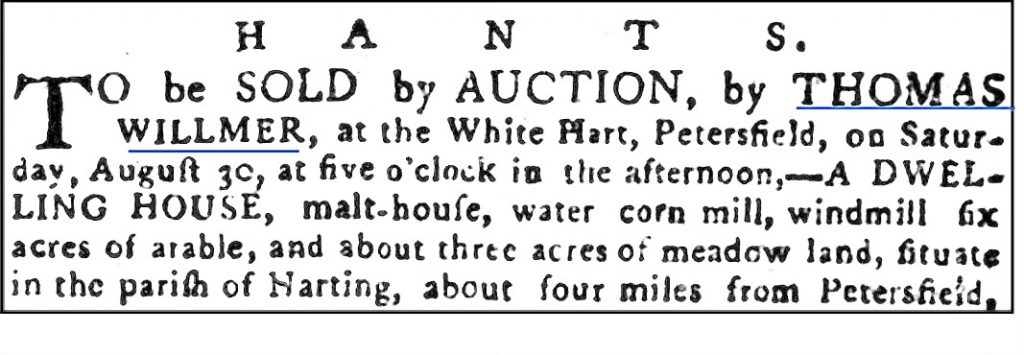
“This Thomas Willmer was no ordinary character. Though he kept an ironmonger’s shop, he was also a printer, bookseller, auctioneer, and, as far as I can gather, the land surveyor of the neighbourhood,” wrote Thomas’s grandson, William Willmer Pocock, (WWP) in a biography of his father William Fuller Pocock (Thomas’s son-in-law). Thomas Willmer knew the value of property ownership, and at various times he owned farms in Liss and Clanfield, the two side-by-side properties on Petersfield High Street, other Petersfield properties, as well as what became known as Willmer House in Farnham. “The Willmers were members of the mainstream middle classes of small-town Hampshire and were on their way up” according to one observer.
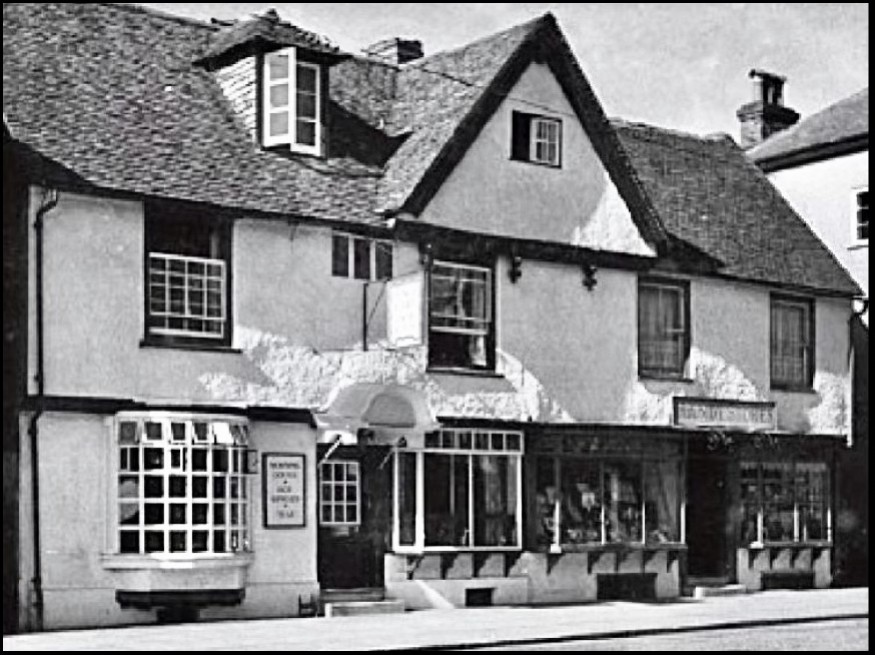
In 1781, Thomas married Fanny Spilsbury of Lewes, “a young lady of great personal attractions, having a few hundred pounds in her dowry” (WWP). The old Burch family house where Thomas grew up with his Aunt and Uncle Burch was not suitable for this up and coming family and Thomas purchased a property called Hoares House in Petersfield High Street – “a long-fronted house, at one end of which the business was carried on, and which bears the date of 1611 in the pendant of the barge boards of the central gable” (WWP).
Hampshire Archives has a number of records for Thomas Willmer including one from 1785 when “Petersfield declared free of smallpox by town authorities including Thomas Willmer, Parish Overseer” and in 1800 “A notice of printing press and type and licence to print for Thomas Willmer of High Street, Petersfield“.
Thomas Willmer wrote his Will in 1816 (in which he refers to his Farnham house and his daughters keeping school there) and named as trustees to manage his estate his wife Fanny (so long as she remains unmarried) and his older children. Most of the Will was concerned with his instructions in the event that Fanny (“she of great personal attractions“) remarry! In fact, Mrs Willmer lived on for another 27 years as a widow. Thomas Willmer died in his Petersfield house in the High Street in 1818. “On April 21 in this year, Mr. Thomas Willmer, my grandfather, died, at the age of 68. I have been informed that he was of so abstemious habits, that when fever, the result of a cold, set in, the doctors could not resort to the practice then prevalent of drawing blood or other modes of reducing” (WWP).
Fanny Spilsbury Willmer (1761-1845)
Fanny was born and raised in Lewes, Sussex, the daughter of a moderately wealthy innkeeper, John Spilsbury, who originally hailed from Worcestershire. John Spilsbury “took the Lewes Arms, where he was highly respected and well patronised. Being a great wit and singing ‘a good song’ he was as a landlord popular with high and low,” (WWP). Fanny inherited a one quarter share of the Spilsbury wealth upon the death of her mother in Lewes which would have then passed into the control of her husband. Her grandson wrote about Fanny: “the mother, in all domestic matters, was undoubtedly, the ruling genius and the particulars of the family I had principally from the lips of Mrs Fanny Willmer” (WWP).
Mrs. Willmer’s “ruling genius” involved finding husbands for her six daughters, and she clearly made sure that the Willmer girls were well educated. During the Napoleonic Wars, Petersfield was deemed a ‘parole town’ where officers among the French prisoners were allowed to reside. These officers were usually “men of the first families, highly educated and polished, but at Petersfield they found few persons beside the Misses Willmer who could understand French, and these young ladies were consequently greatly sought after as interpreters, and so enjoyed society that gave them a finish far beyond what was usual around” (WWP).
The older Willmer girls came to the attention of the owner of Petworth House, George O’Brien Wyndham, 3rd Earl of Egremont, an English peer, landowner and art collector; he is also remembered for keeping “around fifteen mistresses and he fathered more than forty illegitimate children” (Wikipedia). The Earl of Egremont was very much connected with Petersfield and endowed the town with funds for schools, almshouses, and public buildings. William Willmer Pocock explained that “Egremont solicited their (the Misses Willmers’) company at Petworth House, and sent over his carriage-and-four for them. Whilst their father hesitated, his wife had packed my mother (Fanny) and her sister Nancy into the carriage and sent them off, and for several years following they spent much of their time there with his Lordship’s daughters” (WWP).
By a most curious incident in 1801, Mrs Willmer found a way into London society. Her grandson explained: “In front of the Petersfield house was a small patch of ground paved with pebbles. Mrs. Willmer was one day applying hot water to destroy the weeds that grew between them. This attracted the attention of a lady looking out at the window of the hotel opposite, and she determined to call on the ‘tinman’s wife’. She found Mrs. Willmer a highly attractive and pleasant woman, nursing a lovely baby who subsequently became Mrs. Brewer. An intimacy resulted, and nothing would satisfy the good lady and her husband but that this child should visit them at their home in London, which turned out to be the upper part of 27, Southampton Street in Knightsbridge, where also my father, William Fuller Pocock, was living. The child being so young, her eldest sister, Fanny, then about 19, went to take care of her. This couple were Mr. and Mrs. Butler, who never forgot their little visitor, Caroline, nor her sister, not even when making their wills” (WWP). Please see the footnote on the Butlers who lived a most interesting life.
By sending two of her daughters off to London, Mrs. Willmer had found the Pococks! The relationship she developed with the Pocock family of Knightsbridge was especially advantageous as her eldest daughter married into that family, who in turn, introduced two more daughters to their future husbands. In addition, the Pococks assisted Henry, her son, who had trained as a surgeon, in obtaining a practice of his own. The Willmers had arrived!
The 1841 Census showed Fanny Willmer (of independent means) living on Petersfield High Street with daughter Mary and a domestic servant called Elizabeth Payne who remained in the Petersfield house until Mary Willmer died in 1867. “Fanny Willmer, relict of the late Mr. Thomas Willmer, in her 84th year, died in Petersfield on Friday 24th of January, 1845” (Patriot Magazine). No record has been found of a Will made by Mrs. Willmer.
Thomas and Fanny Willmer’s Children (in birth order)
Fanny (1783-1833)
“When my father (William Fuller Pocock) was 21, he began a diary styling himself as architect of 27, Southampton Street (Knightsbridge)” (WWP)
As we saw Fanny, met architect and Methodist preacher and writer, William Fuller Pocock of Knightsbridge through her visit to the Butler home. “1801 was the first year of my father’s professional career, and he formed the acquaintance of her who was afterwards, and after too long an interval, to become his partner in life. My father and Miss Willmer seem to have met repeatedly with Mr. Butler’s house being the usual trysting place, and in July 1802, he makes a special entry of meeting her and her mother at Mr. Butler’s, and I should guess, from the business-like character of Mrs. Willmer, that from that time forward they were considered to be engaged.“ (WWP)
Unmentioned in the diary of William Fuller Pocock was the baptism at St George’s Church, Hanover Square in June 1803 of a month old baby girl, recorded in the church register as “Fanny Pocock, daughter of William Fuller Pocock and Fanny Will“. You will notice that Fanny’s name is somewhat disguised. What happened to baby Fanny is unknown.
Fanny’s younger sister Ann had opened a school for young ladies in Farnham around 1803 and “Fanny soon joined her sister, but visited London at the periodical holidays for the purpose of securing some intercourse with her betrothed” (WWP). Farnham was to remain Fanny’s home until she married.
In 1809, Miss Fanny Willmer, after a nine year courtship, finally married William Fuller Pocock in Farnham “that being her proper residence and they started for London the next day with one of her sisters, I suppose Harriet, accompanying them. My father, later regretted the long caution of their betrothal” (WWP). After their marriage, Fanny and William Pocock had six children, three of whom were given ‘Willmer’ as middle names. Fanny Pocock died in 1833 at Glenridge, the Pocock country residence in Virginia Water, Surrey. “She joined the Methodist society at Chelsea and became an active and useful member of the church of Christ to which she was united, and delighted in plans of Christian benevolence” wrote one obituary. William Fuller Pocock is remembered as the architect of the Leathersellers’ Company Hall in London, the priory at Hornsey, the headquarters of the London Militia, the Wesleyan Centenary Hall in Bishopsgate, Christ Church in Virginia Water, and a great number of smaller works. He also wrote four books including ‘Architectural Designs for Rustic Cottages, Picturesque Dwellings, and Villas‘. William Fuller Pocock died in 1849.
Ann Willmer (1785-1813)
Ann was baptised as ‘Nancy’ but always called Ann other than in the Pocock Family History. Like her sister Fanny, Ann moved to Farnham. “In 1803, my father made the acquaintance of another sister, Nancy (afterwards Mrs. Newnham). She was next in age to Fanny, and it must have been not long after this that she started a school for young ladies at Farnham, that acquired a well-deserved reputation and maintained it for many years” (WWP). Much more about this school will be discussed in Part Four. In 1806, Ann and her sister Mary left the established church and joined the Independent Dissenting Congregation of Farnham. This is the first historical record of a Willmer in Farnham since the time of the ladies’ great-grandfather, Richard Willmer. The Willmers were friendly with the Newnham family of Farnham and Mary Newnham, wife of Dr. John Newnham, was so dissatisfied with the Farnham Vicar (Dr. Lock) who was “avowedly hostile to evangelical truths” that she and others left the Church and raised funds to build Ebenezer Chapel in East Street. (Source: Pat Heather, Farnham Historian). Ann Willmer married the son of John and Mary Newnham, Dr. William Newnham, in 1812 but Dr. W. Newnham’s biography reported that, sadly: “He lost his first wife after only a year of marriage when Mrs Newnham died suddenly in late 1813″.

Thomas Willmer (1786-1787): died in infancy.
Mary Willmer (1788-1867)
Mary is the Willmer sister most involved with the school in Willmer House as, one by one, her sisters married, or died. By 1841, Mary was no longer involved with the school and was living with her widowed mother in Petersfield. The 1861 census recorded Mary Willmer (Landholder) living on Petersfield High Street with her servant, Elizabeth Payne. In 1867, at age 79, Mary Willmer died and was buried in Petersfield churchyard. In her Will, Mary directed that her estate be divided into three equal shares with one share going to her brother, Dr. Henry Willmer, one share going to the two surviving children of her sister Caroline, and the last share going to the five surviving children of her sister Fanny. Mary also remembered the faithful family servant, Elizabeth and left her some furniture, bed linen, “my Bible, the one we used every day” and, more importantly, a year’s wages and £5 for mourning clothes. Mary Willmer outlived all her siblings except for her brother Henry.
We will have a lot more to say about Mary Willmer in Part Four of The Willmer Story
Harriet Willmer (1790-1814)
Harriet moved to Farnham along with her sisters, living in Willmer House in West Street. “I am informed that my mother’s sister Harriet, a little body with a curly head—so unlike the tall figures and abundantly flowing locks of the other members of the family—was afflicted with consumption, but made an effort to remain with my mother till after my birth in 1813, and then went ‘home to die.’ Her sister Nancy died a few weeks before, the survivor being kept in ignorance of the former death” (WWP). Harriet died in Farnham in February 1814, age 24. An obituary wrote “Died, at Farnham, Miss Harriet Willmer, daughter of Mr. Willmer, printer, &c. Petersfield, and sister to the late Mrs. W. Newnham, whom she survived by only a few weeks. ‘Cropp’d like a rose before tis fully blown, Or half its worth disclos’d’.”
Dr. Henry Willmer (1792-1869)
The Willmers had the financial means to send young Henry to London to be trained as a doctor and with the help of the Pococks, he was able to set himself up in practice in Baker Street, Marylebone. Henry must have done well in his profession as he acquired The Clockcase Estate in Virginia Water and he hired his brother-in-law, William Fuller Pocock, to design the renovations and landscaping required. Five years later, King George IV claimed “an insufferable annoyance at finding himself and the Court as they enjoyed themselves on Virginia Water being observed by a private individual” (Royal Landscapes) and insisted on buying The Clockcase Estate. Henry sold the property to the King and purchased Down Place in Harting, Sussex instead as his country estate, adding a Thameside property called The Fishery in Bray, Berkshire (remember, the Willmers were on their way up). He married Ann Pain ‘a gentleman’s daughter’ from Lewes) and the couple were survived by two daughters. Dr Willmer died, age 77, in 1869 and was buried in East Harting.
Jane Willmer (1794-1864)
Jane was engaged for many years to another Pocock acquaintance, John Constable, a wholesale druggist from Streatham, and in the meantime she lived in Willmer House in Farnham. Eventually, at age 38, she and John married in Farnham Parish Church in 1832. “They had been engaged for years, but had mutually agreed to postpone the wedding till they were each in a financial position agreed upon. After the wedding, Mr. Henry Willmer drove my father, mother, and my sister, Mary Ann, who had been at the school at Farnham, to Glenridge” (WWP). Jane’s sister Fanny was concerned about this marriage as “Jane had suffered from want of care in the rapid growth of her youth, resulting in curvature of the spine. This my mother feared might cause danger in child-birth, and wrote her accordingly, perhaps too late for an alteration of their determination to marry” (WWP). Jane Constable “with her first and only child was near losing her life, the child was still-born, and her husband, in his anxiety running about for doctors, caught cold, and ended in the loss of his sight” (WWP). The 1851 census confirms that “John Constable, age 68, Druggist was blind”. John died in 1853 and Jane died the following year in Balham in the London Borough of Wandsworth, age 70.
Caroline Willmer (1798-1854)
Caroline was the youngest child and in 1821 in Petersfield, she married John Brewer, a friend of her brother-in-law, William Fuller Pocock. John Brewer was a wealthy stockbroker and styled himself as ‘Gentleman of Streatham Hill’ in his will. Caroline and John were, like the Pococks, members of a Methodist congregation. John died in 1853 with Caroline, aged 55, a year later; they were survived by three children. Unfortunately, a dispute arose over the administration of John Brewer’s will and his son John Brewer Jnr (a barrister) took the executors of his father’s will, William Willmer Pocock (Caroline’s cousin) and Frederick Le Gros Clark (John Brewer Snr’s son-in-law) to court “over the right of the executors, who were liable at law to the extent of the deceased assets, to a substantial indemnity, by retaining a reasonable portion of the funds” (The Jurist). The court found in favour of the defendants. Brewer v. Pocock became something of a landmark decision, and is still referenced in similar cases.
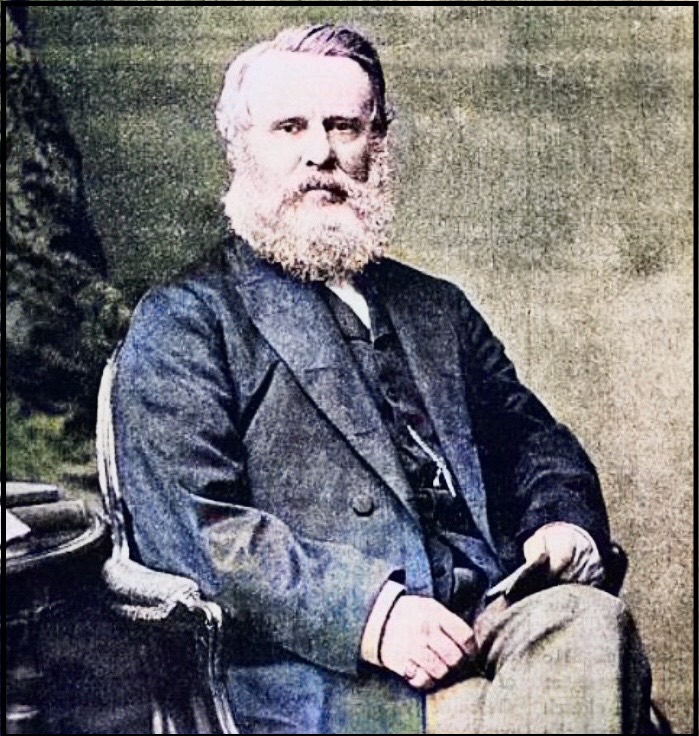
William Willmer Pocock’s family history includes many anecdotes about the Willmers and the Pococks
- Thomas Willmer wrote to his son-in-law in 1812: “‘You receive enclosed the halves of three £10 bills, and Sunday evening’s post shall present the remainder’; the Willmer family were in the habit of posting their money in this way”.
- 1815: “In the summer, Mr. Pocock drove his wife (Fanny) and children to Farnham and thence to the Willmers at Petersfield, and in going down Stoner Hill the horse stumbled, and in endeavouring to recover himself fell, and they were all thrown out. None, however, were hurt except the little child, Anna, who falling upon the horse cut her nose against the harness, producing a scar for life”.
- Mrs Fanny Pocock wrote to her husband from Petersfield in 1825 when their daughter was ill: “Anna has had her head shaved (partly), and her poor forehead disfigured with the leeches. She has had twenty-seven on her forehead temples and ten on her side. She desires me to assure you she is feeling much better this evening and is sitting up eating grapes”.
- Mrs Fanny Pocock wrote from Farnham on 28 September 1832: “Yesterday was a day of thanksgiving for being preserved from cholera during the hopping season; not one case occurred the whole time, which the inhabitants seem to feel with great gratitude” (WWP).
The Willmer Legacy
The family surname ‘Willmer’ ended with the death of Dr Henry Willmer in 1869 but thanks to the Victorian habit of using a family last name as a first or second name, Thomas and Fanny Willmer still have a descendant called ‘Willmer’ today: David Willmer Pocock is a member of the Australian Parliament, serving as a Senator for the Australian Capital Territory. He is a descendant of William Willmer Pocock’s brother, Reverend Thomas Willmer Pocock.
The generations after Thomas and Fanny mainly prospered, had many children, and founded dynasties of their own. Many became architects, doctors, lawyers, churchmen, merchants, and engineers. Some examples of people who carried that ‘Willmer’ name: Alfred Willmer Pocock, an engineer in Pimlico, who was granted many patents for his engineering inventions; Reverend Thomas Willmer Pocock who went to South Africa as a missionary, eventually settling in Cape Province; Francis Willmer McAulay (Captain R.F.A.) who died in the First World War; Percy Willmer Pocock who followed the profession of his great-grandfather and became an architect, dying in 1986 at the age of 100.
In conclusion, many, many people today can trace their lineage back to Richard Willmer, Worsted Maker of Dogfludd, Farnham through his grandsons Reverend Richard Willmer (discussed in the previous post) and Thomas Willmer of Petersfield.
The Butlers
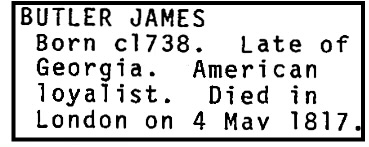
“On May 4 1817, the death of Mr. Butler was mentioned in my father’s diary; and as, a month later, my mother attended at ‘the Bank’ to meet Mr. Butler’s executors, I conclude she took something under his will” (WWP). As we had the date of death, the last name, and we knew that he lived in the Knightsbridge area, we were able to find Mr. Butler’s Will. James Butler Esq left Caroline Willmer £1000 in bonds and her sister Fanny Pocock, £300 in bonds. He left the rest of his estate to a family in “the state of Georgia, America”, his wife having predeceased him. Further research revealed that James Butler had been among the wealthiest rice planters in Georgia’s Great Ogeechee region but as he remained loyal to Britain, his estates were confiscated and he was expelled from Georgia after American Independence. Unfortunately, his large rice plantations were only possible due to the labour of many enslaved people. His wife, the former Ann Dix, came from a similar background in Savannah, Georgia. After the Butlers were forced to leave Georgia, they settled in London. As an American Loyalist who fought on the British side, he received compensation from the British government.
Select Sources
- Many thanks to the Paul Mellon Centre of London for providing us with a copy of the Blackmansbury Quarterly Vol 9 which was our primary resource
- Copy of Wills from ancestry.com (by subscription)
- Revival and Religion Since 1700 (Google Books)
- T and T Companion to Nonconformity (Google Books)
- Land & Allegiance in Revolutionary Georgia (Google Books)
- Hampshire Archives